FAQ for control valves
Frequently asked questions about control valve performance, selection and applications
Quick links to FAQ sections:
Understanding control valve function, performance and applications
Selecting and configuring the right AVK control valve
Installation, operation and maintenance of AVK control valves
Brochures, technical information, datasheets and installation instructions
Understanding control valve function, performance and applications
Can AVK control valves be connected to SCADA systems?
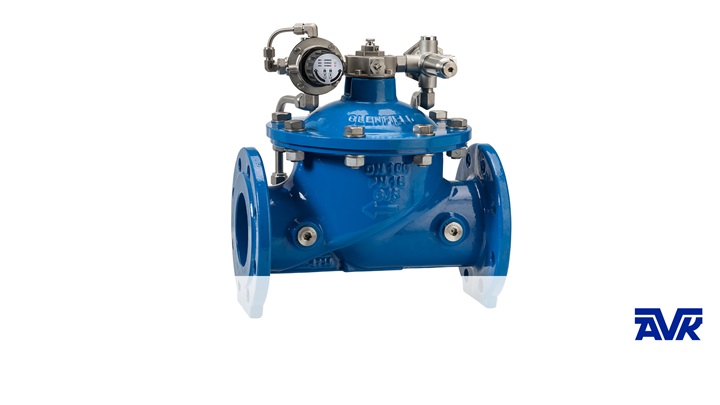
Yes. AVK offers control valves prepared for SCADA integration, such as the pressure reducing control valve with electrical actuator.
See product sheet
What should I do if there is a risk of cavitation?
Series 859 can be ordered with anti-cavitation trim, or you can install valves in series. An anti-cavitation trim “moves” the cavitation to where it does not cause damage.
See appendix
What is the typical pressure loss across an AVK control valve?
A correctly sized AVK control valve typically results in a pressure loss of approximately 0.3 bar.
Check valve size
What is the advantage of the parabolic plug design?
The parabolic plug ensures highly accurate regulation and stability at low flows. It also reduces noise and vibration, supporting improved network performance.
See more features
What is the advantage of adjusting the regulating speed?
Adjusting the regulating speed helps eliminate fluctuations in sensitive networks and prevent water hammer and surge problems. Adjustments are easily made on the distribution block using standard tools.
More details
My control valve opens or closes too fast or too slowly – what should I do?
You can adjust the opening or closing speed directly on the distribution block using standard tools.
See videos here
Can I use control valves where differential pressure is high?
Yes. For differential pressures above the allowed level (per cavitation guidelines), AVK recommends using anti cavitation trim or installing valves in series.
See appendix
Can an AVK control valve maintain a constant flow?
Yes. AVK constant flow valves maintain flow with high accuracy regardless of pressure changes in the network. Common applications include reservoir inlets and outlet flows into distribution networks.
See video
Selecting and configuring the right AVK control valve
What information is needed to select the correct control valve?
To determine the correct valve type and size, information about maximum and minimum flow, continuous flow, maximum and minimum inlet pressure, required pressure and pipe size is needed.
Free calculation
Which pressure ranges are available for AVK pressure reducing valves?
Available ranges: 0.6–6 bar, 5–11 bar and 10–16 bar. Springs can be changed on site without removing the valve. Furthermore, AVK offers valves dedicated for low pressure applications in the range of 0.1-1 bar.
See range
Which pressure ranges are available for AVK pressure sustaining valves?
Available ranges: 1.5–6 bar, 5–10 bar and 10–16 bar. Springs can be changed on site without removing the valve. Furthermore, AVK offers valves dedicated for low pressure applications in the range of 0.3-1.5 bar.
See range
Can I order an AVK control valve with a pressure range from 0 to 16 bar?
No. To ensure precise regulation, AVK uses dedicated springs for narrower pressure ranges that match the intended operating window.
See video
Can an AVK control valve be modified for another application?
Yes. Thanks to the modular pilot system, AVK control valves are easy to alter for other or multiple applications without replacing the valve. A leakage test is recommended after modifications.
Configurations
Is it possible to install a PRV controller on an AVK series 859 pressure reducing valve?
Yes. A PRV controller can be easily installed directly on AVK series 859 pressure reducing valves. Soon we will release our new Equilo System with PRV controller.
See how
Can I install solenoid override on a standard pressure reducing or pressure sustaining valve?
Yes. Series 859 pressure reducing or pressure sustaining valves can easily be upgraded with solenoid override.
See how

Do you need expert assistance?
Contact Team leader and product manager, Martin Børsting by following the link below.
Contact info
Installation, operation and maintenance of AVK control valves
What tools are required to operate and maintain an AVK control valve?
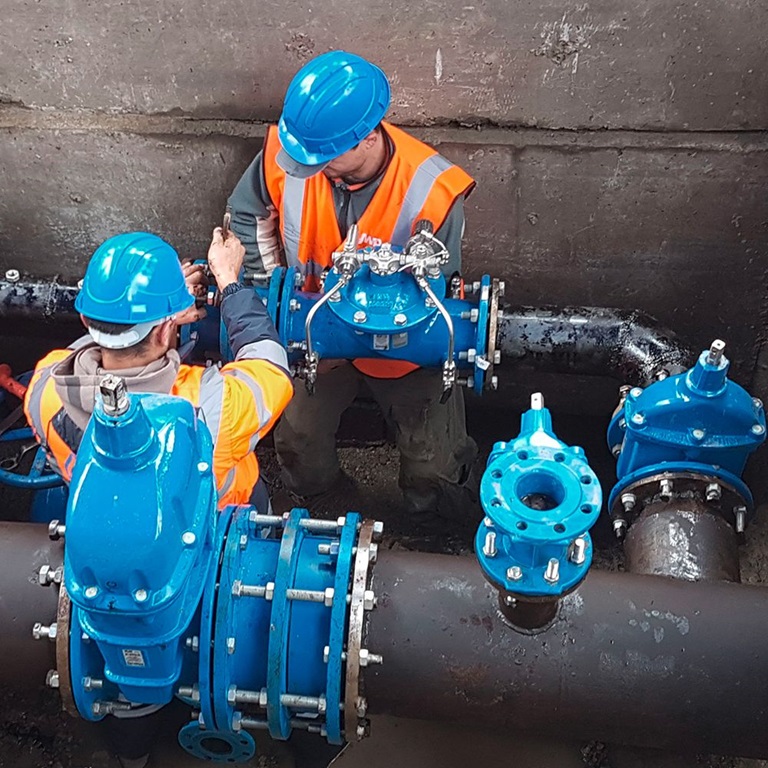
Standard tools such as a wrench/spanner and screwdriver are sufficient for normal operations and maintenance.
See videoguides
How often should I maintain my control valve?
Maintenance frequency depends on the characteristics of the distribution network. A first inspection is recommended after about one month, or sooner if the valve is not in full control. In some networks, valves can operate for years without requiring service.
See brochure
How do I perform maintenance on an AVK control valve pilot?
• Flush and clean the filter
• Bleed air from the top air valve on the distribution block
• Ensure the orifice between filter and distribution block is clean
• Inspect the pilot handle spring for corrosion
• Bleed air from the top air valve on the distribution block
• Ensure the orifice between filter and distribution block is clean
• Inspect the pilot handle spring for corrosion
See video
How do I perform maintenance on the main valve of an AVK control valve?
• Remove bonnet, clean internal surfaces and channels
• Check the condition of the inside spring
• Inspect diaphragm for fractures or damage
• Check plug and seat for markings and general condition. The valve must close drip tight.
• Check the condition of the inside spring
• Inspect diaphragm for fractures or damage
• Check plug and seat for markings and general condition. The valve must close drip tight.
See video